The pitch
Magna-Tiles are the original magnetic building tiles — flat translucent plastic squares and triangles edged with magnets that snap together into 3D structures. They've been around since 1997 and remain the gold standard, despite a flood of cheaper imitators (Picasso Tiles, Connetix, supermarket own-brands).
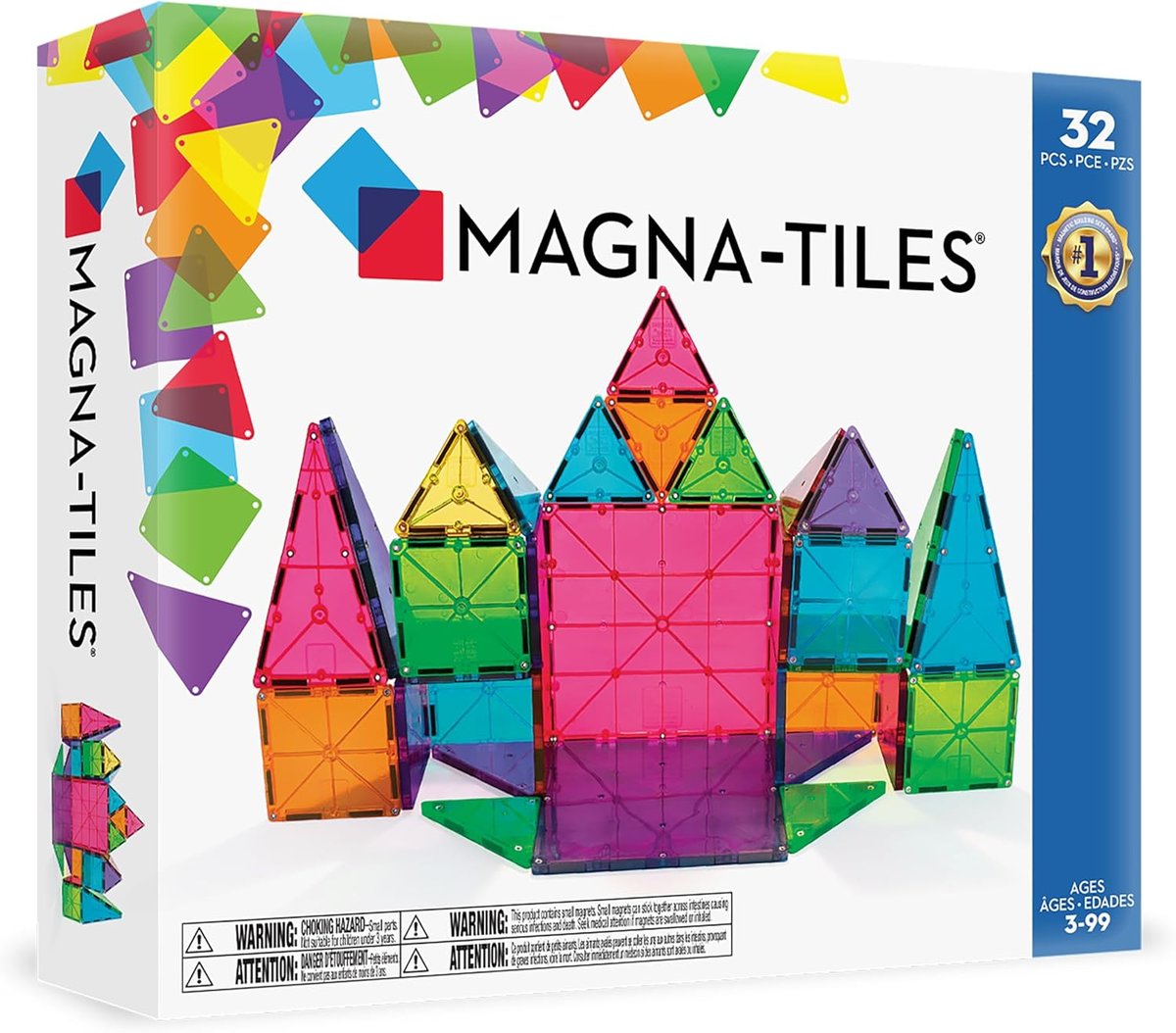
The 32-piece Clear Colors set is the entry-level: 18 squares (small + large) and 14 triangles, all in transparent jewel-tone plastic. Recommended for ages 3+.
What's brilliant
The magnet strength is the difference. Magna-Tiles use rare-earth magnets calibrated so the tiles snap together with a satisfying thunk and stay together — even when you build vertical towers, even when a sibling shoves the structure. Cheaper magnetic tiles use weaker ferrite magnets that fail at exactly the moment a kid finishes their build, which is heartbreaking and silently destroys their motivation. The £20 set you saw on Amazon for half the price is half the price for a reason.
They're translucent and stunning. Held up to a window or near a lamp, the colours play across the floor. A simple cube becomes a piece of stained glass. This isn't a feature you'd think matters until you see a 4-year-old realise they've made a "rainbow castle" by shining a torch through it.
They scale. All Magna-Tiles sets — and the various themed expansion packs (cars, runways, ice arena) — interlock. So when grandparents ask "what should I get for the birthday," you can confidently say "more Magna-Tiles."
They genuinely teach geometry. Flat shapes folding into 3D structures is a Maths concept most kids don't encounter formally until age 8 or 9. Magna-Tiles smuggle that intuition into the under-fives in a way no other toy quite manages.
What's frustrating
32 isn't really enough. The set is genuinely satisfying for a single child, but two kids playing together hit the limit fast. Realistically, expect to add a 100-piece set within a year of the first one being a hit. Many parents end up with 200+ pieces over time. Plan for it.
The set's value-per-piece is poor compared to alternatives. A Picasso Tiles 100-piece set costs around the same as 32 Magna-Tiles. If you're truly budget-constrained and your child only needs them as a passing interest, the cheap clones do work — just not as well.
They're easy to step on. Like LEGO. Like Duplo. Like literally every children's building toy. Buy a tidy bag and use it religiously.
Cheap alternatives — when do they work?
We tested generic-brand magnetic tiles alongside Magna-Tiles for several months. The honest verdict:
- Connetix — UK competitor, comparable quality, slightly bigger pieces. Worth considering if you want better value, but the magnets are still a touch weaker.
- Picasso Tiles — fine for casual play, but the magnets give up on towers above about 30cm. Frustrating.
- Supermarket own-brand — buyer beware. Magnets noticeably weaker, plastic feels brittle, and we had a tile crack in the first month. Not worth it.
If a child is going to play seriously, Magna-Tiles or Connetix are the two we'd recommend.
Who it's for
This is a great gift from age 3 (when small parts are no longer a choke hazard) right up to age 8 — and one of those rare toys that older siblings still play with. It's the toy you give a household with two kids of different ages.
It's not for kids under 2 (smaller pieces, magnets — get Duplo instead), and it's a poor gift if the child already has 100+ tiles (in which case, gift an expansion pack like Magna-Tiles Cars or Stardust).
Worth £59.99?
For 32 pieces of premium magnetic tiles, yes — but with caveats. If you're buying for the first time, this size is fine to test the waters. If you already know your kid loves them, skip straight to a 100-piece set; the per-piece price drops considerably.
A toy that survives 5+ years of regular play is rare. Magna-Tiles do it. The maths works out fine over time.
Verdict
Magna-Tiles are worth the premium price. The cheaper clones aren't lying about being "magnetic tiles" — they just don't hold together when it matters. For a serious gift, this is one of the best toys you can give a 3-to-8-year-old. The 32-piece is a reasonable starter; plan to add to it.