What it actually is
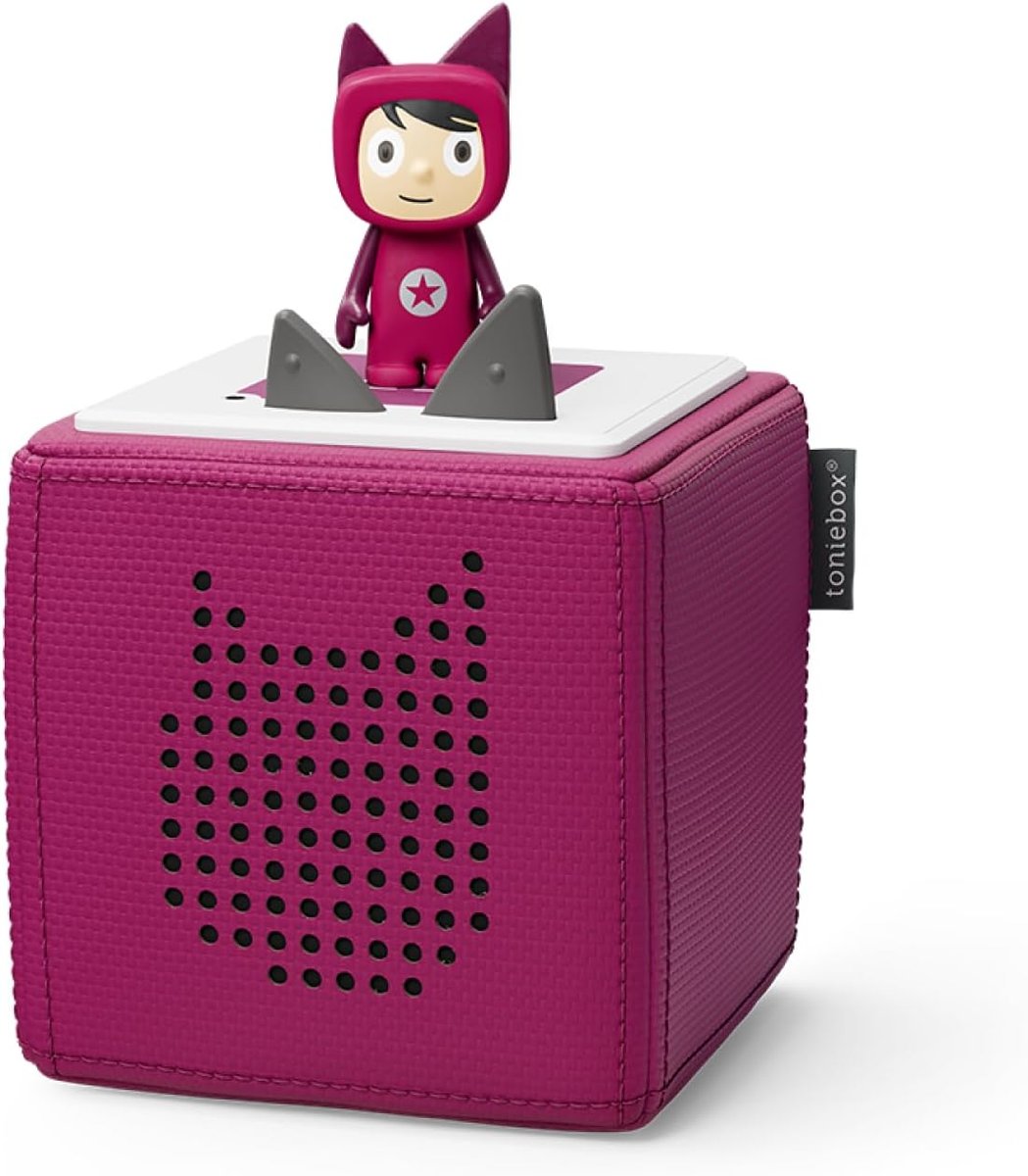
The Toniebox is a soft-cubed audio player roughly the size of a Rubik's Cube but covered in cushioned fabric. It's screen-free, app-free for the child, and the entire user interface consists of: place a small painted figurine (a Tonie) on top, and the story or songs play. Squeeze the ears to skip, tilt the box to fast-forward, tap the top to pause. That's it.
There are no menus, no settings the child can fall into, no on-screen options. For a four-year-old, this is a revelation. They can use it before they can read.
The starter set ships with the box, a charging dock, and one Creative Tonie — a blank figurine you can record your own audio onto via the parent's phone. From there, you build the collection: Julia Donaldson Tonies, Peppa Pig, Roald Dahl, Disney soundtracks, classical music albums, mindfulness stories. Each Tonie costs £14-17 and is a small painted figurine that doubles as a collectible toy.
What's brilliant
The figurines are the secret weapon. A Tonie isn't just a content-delivery NFC card — it's a 6cm painted character that lives on a shelf, in a play kitchen, on a bedside table. Kids treat them as toys in their own right. The Peppa Pig Tonie has been the imaginary protagonist of about 40 different unrelated games in our house. This is the thing the Yoto Mini can't do: you can't role-play with an NFC card.
Genuinely the right interface for under-fives. A three-year-old can operate the Toniebox unsupervised within ten minutes of seeing it for the first time. Place figurine on top, story starts. Squeeze ear, story skips. Lift figurine off, story pauses. That's the whole learning curve. We've watched 18-month-olds use it competently.
The cushioned exterior survives. Tonieboxes are dropped, thrown, stood on, fallen-asleep-on, kicked under the sofa, and rolled around in car footwells. The soft-touch fabric coating means they shrug all of this off. Two years in, ours has a single faint scuff on one corner. No cracks, no dents, no internal rattling.
Creative Tonies are a gift from heaven. £11.99 buys you a re-recordable figurine. The Tonies app lets a grandparent in Australia record themselves reading The Tiger Who Came to Tea and upload it — your kid then has a Granny-shaped figurine on the bedside table that plays Granny's voice on demand. We've seen this make estranged grandparents cry. It's also brilliant for parents who travel a lot.
The catalogue is surprisingly good for very young children. Tonies have signed up Julia Donaldson, Roald Dahl, Beatrix Potter, Eric Carle, Peppa Pig, the entire Bing series, Disney soundtracks, and Bluey. Coverage of the under-5 picture-book canon is excellent. There's also a strong music tier — classical compilations, Putumayo World Music for Kids, Disney sing-along.
What's frustrating
Tonies cost more than Yoto cards. £14-17 versus £8-13 for Yoto. The figurine adds production cost, and you're paying for it. A serious Tonies collection (15-20 figurines) costs £200+ over the first year. Plan for it as a birthday/Christmas gift category for grandparents and aunts/uncles.
The catalogue thins out past age 6. Tonies is brilliant for ages 3-5. From age 6, kids start wanting longer audiobooks (the Harry Potter audiobooks, the Wimpy Kid series, longer Famous Five-style adventures) and the Tonies catalogue doesn't really cover that depth. Many families transition to Yoto Mini around age 6 specifically for the longer-form audiobook catalogue.
Battery life is fine, not great. About 7 hours per charge — comfortable for a day's use but not multiple. Charging is via a magnetic dock that's easy to misplace. Get a second dock for £15 if you have multiple rooms.
Volume is intentionally limited. Like the Yoto, the Toniebox caps volume at safe-for-kids levels. Brilliant for hearing protection, but you can't really hear it from the next room. Fine for a bedside player; less good as a kitchen radio.
Toniebox vs Yoto Mini vs Yoto Player
For most families the answer is Toniebox first, then Yoto Mini around age 6. Here's the actual comparison:
- Toniebox — best for ages 3-5. Tactile figurines, simpler interface, excellent picture-book catalogue. ~£80 starter set. Figurines £14-17 each.
- Yoto Mini — best for ages 5-9. Pocket-sized, headphone jack, larger catalogue including longer audiobooks and podcasts. ~£70. Cards £8-13.
- Yoto Player — best for bedside fixture in older child's room. Bigger speaker, better display, mains-powered. ~£100.
Families with multiple kids often end up with both — Toniebox in the lounge for younger sibling, Yoto Mini in the older child's bedroom. Resale value on the Toniebox holds up well; a 2-year-old box typically sells for £40-50 on Vinted.
Who it's for
A 3-year-old's first birthday-after-they're-properly-talking. A grandparent's third-birthday gift to the grandchild they want to record stories for. A long-haul-flight family who need screen-free entertainment that won't end with a frazzled parent unlocking an iPad.
It's not the right buy for a baby (under-3s mouth the figurines, which isn't safe), or for households where the child is already deep into Yoto cards and doesn't need a second ecosystem. And if the gift recipient is approaching school age and reading independently, you may want to skip straight to Yoto Mini.
Worth £79.99?
Yes — and the secondhand market makes it lower-risk. If you buy new and your child doesn't take to it, you can recoup £40-50 on Vinted within a week. If they do take to it, it becomes one of the most-used objects in the house for two years. The starter set price (£79.99 with one Creative Tonie included) is fair.
The real cost is the figurine ecosystem — budget £150-250 over the first year as the collection grows. Most families find this is happily covered by birthday and Christmas gifts from family.
Verdict
The Toniebox is the right first audio player for ages 3-5. The tactile figurine system is genuinely better for very young children than the Yoto's NFC cards, and the catalogue depth at the picture-book age range is excellent. Half a star deducted because the catalogue thins for ages 6+, where Yoto Mini is the natural next step. A canonical British nursery item that's earned its reputation.